
Butter Chicken


This post may contain affiliate links. Read my full disclosure policy.
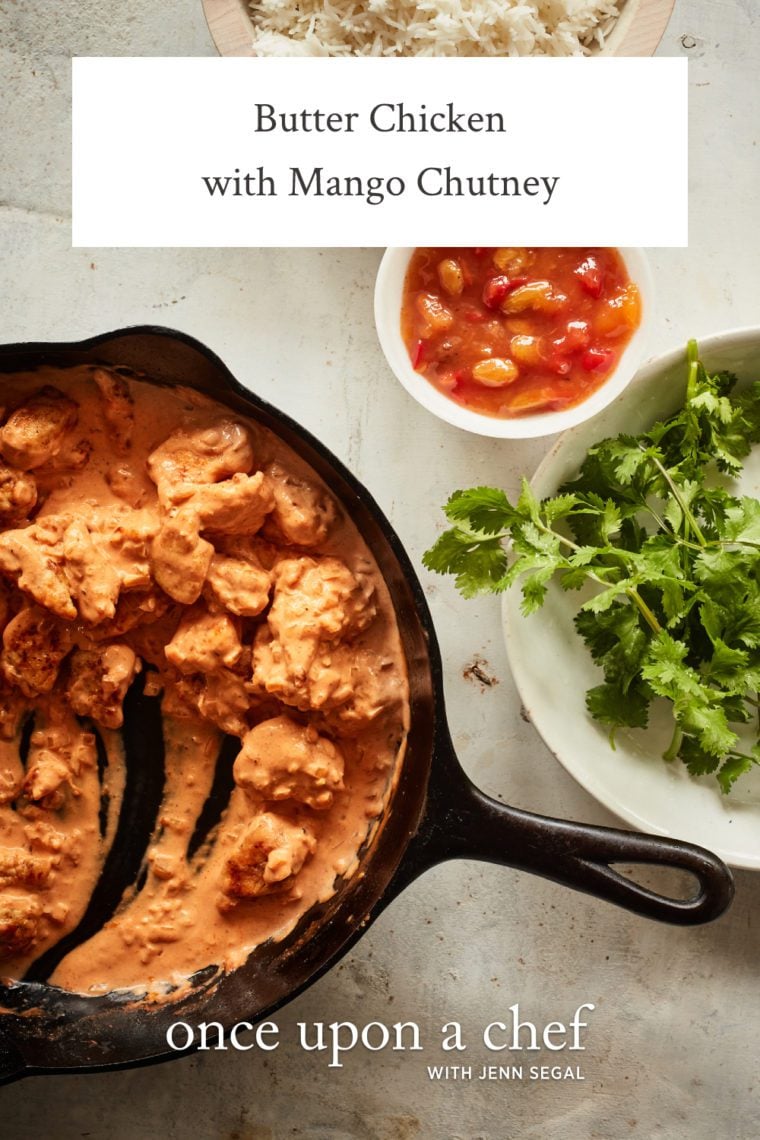
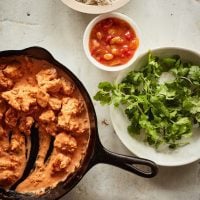
Succulent chicken bathed in a buttery, warmly spiced tomato sauce makes this Indian restaurant favorite hard to resist.
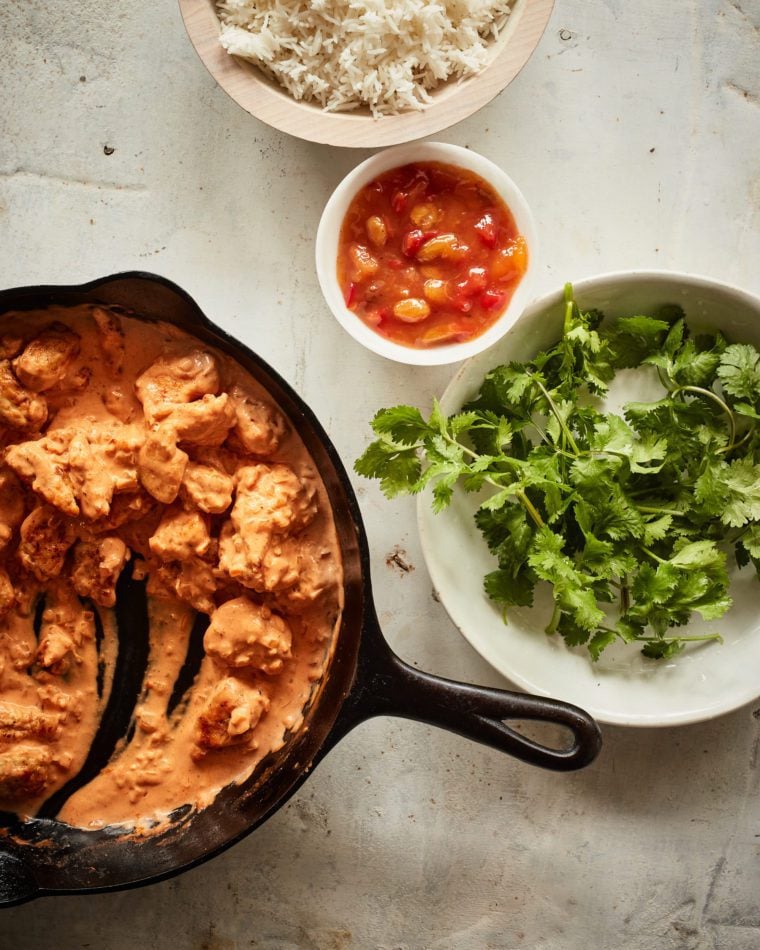
Photo by Johnny Miller (Clarkson Potter, 2021)
You’ll find butter chicken, or Murgh Makhani, on countless Indian takeout menus in the U.S., but its origins are said to go back to a restaurateur in India who combined leftover chicken with a tomato sauce enriched with butter and cream. Traditionally, the chicken is marinated and cooked in a tandoor, or clay oven. To make this butter chicken recipe more practical for home cooks, I skip the marinating and sauté seasoned chicken in a skillet before finishing it in the sauce. The chicken turns out incredibly tender—in fact, one reader said it must be called “butter chicken” because the chicken is so tender, it’s like “buttah!”
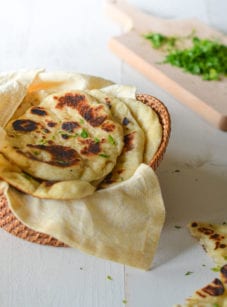
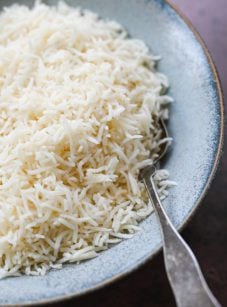
Similar to chicken tikka masala, butter chicken is a great introduction to Indian food for kids because it’s relatively mild. Serve it with basmati rice or naan, and consider a little mango chutney on the side; its gingery sweetness is a nice counterpoint to the savory sauce.
“If I could give you ten stars for this recipe, I would…As good as any take-out Indian food I have ever eaten. A definite winner!”
What You’ll Need To Make Butter Chicken
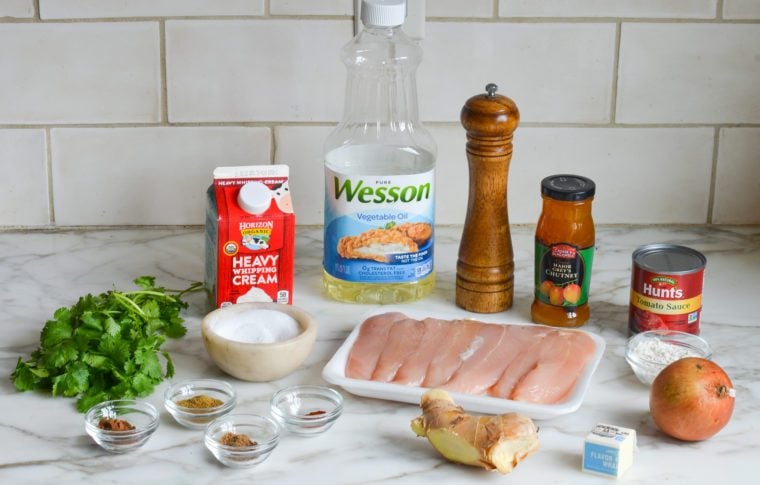
- Chicken Tenderloins: Naturally tender and quick-cooking, they’re ideal for this recipe. Trim off the tough white tendon with kitchen shears before cooking. Boneless, skinless chicken breasts will also work, but because they’re leaner, they’re easier to overcook and dry out.
- All-Purpose Flour: A light coating helps the chicken brown nicely and also thickens the sauce a bit.
- Unsalted Butter & Vegetable Oil: Used together to brown the chicken. The butter brings the taste you want in butter chicken, while the oil helps keep it from burning over the higher heat—a handy stand-in for traditional ghee.
- Onion: Cooks down until soft and gives the sauce a lightly sweet base.
- Fresh Ginger: Brings a warm, peppery bite that’s especially good with the tomatoes and spices.
- Garam Masala, Coriander, Cumin & Cayenne Pepper: Garam masala is a fragrant Indian spice blend, typically made with warming spices such as cinnamon, cardamom, and cloves. Along with coriander and cumin, it gives the sauce its warm, aromatic flavor; the cayenne adds the heat, so you can adjust it depending on how spicy you like it.
- Canned Tomato Sauce: Forms the tomato base of the sauce and brings just enough acidity to balance the butter and cream.
- Heavy Cream: Makes the sauce smooth and creamy and mellows the tomatoes and spices. Full-fat coconut milk works as a dairy-free alternative.
- Cilantro: A fresh finishing touch that cuts through the creamy sauce and adds a little color.
- Jump to the printable recipe for precise measurements
Step-by-Step Instructions
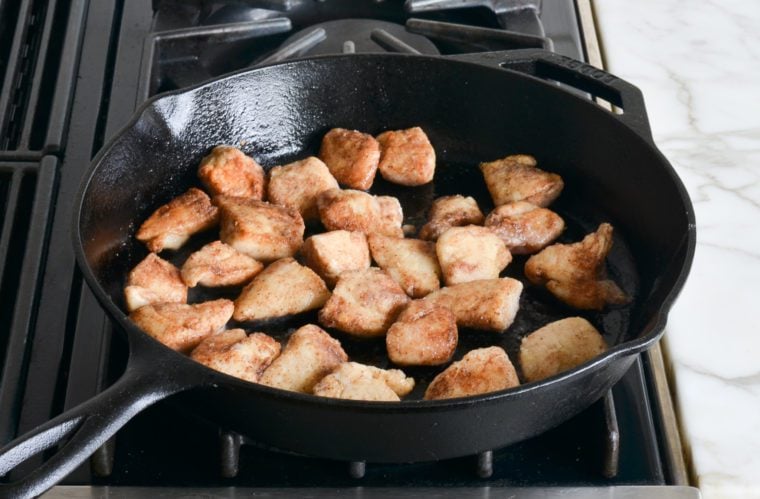
Step 1: Season and brown the chicken. Toss the chicken with the seasonings and flour, then arrange it in a single layer in the hot skillet and cook until lightly golden underneath. Don’t worry about getting a deep, even crust on every piece; a little color is all you’re after at this stage, since the chicken will finish briefly in the sauce later on.
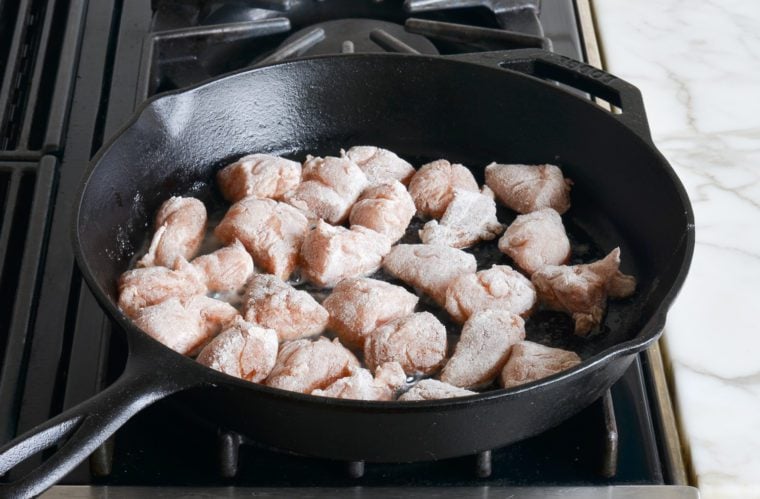
Step 2: Finish cooking the chicken. Flip the chicken and cook just until cooked through, then transfer it to a plate. Keep the skillet as is—the browned bits left behind will become part of the sauce.
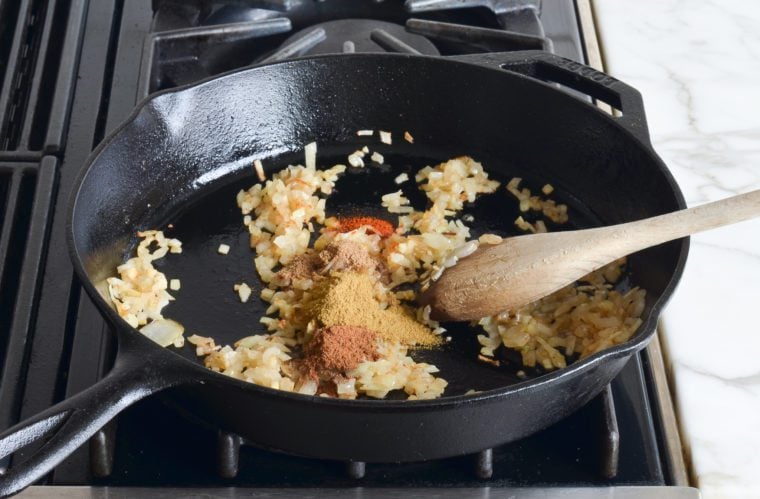
Step 3: Cook the aromatics and spices. In the same skillet, cook the onion and ginger until the onion is soft and translucent, scraping up some of the browned bits from the chicken as you go. You’re not looking to deeply brown the onion; once it has softened and lost its raw bite, stir in the spices and cook briefly.
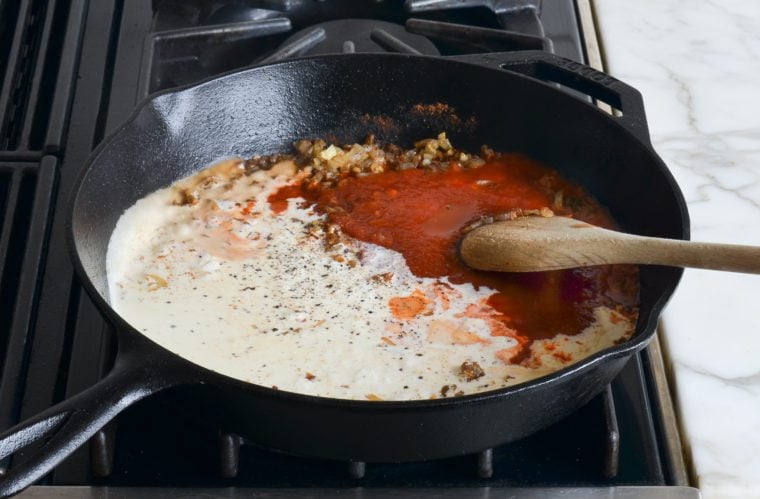
Step 4: Make the sauce. Add the remaining sauce ingredients and bring to a gentle boil, then simmer uncovered until slightly thickened. It doesn’t need to get very thick at this point; it will continue to come together once the chicken goes back in.
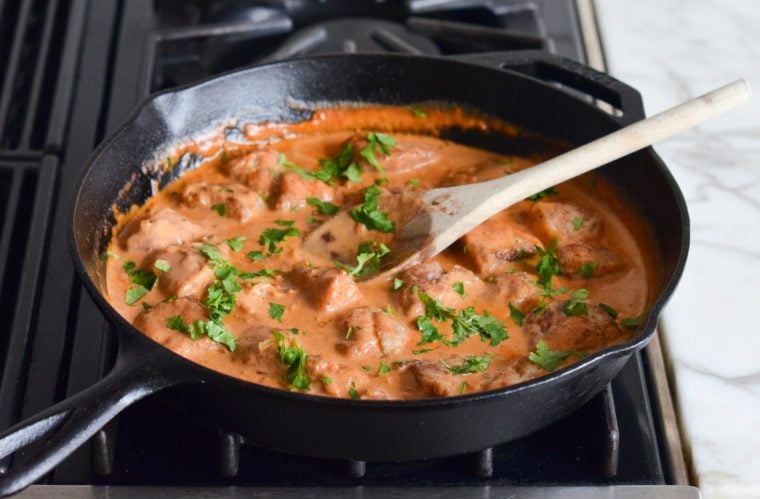
Step 5: Finish the butter chicken. Return the chicken and any juices to the sauce and give everything a few minutes to come together over gentle heat. Taste before serving and adjust the seasoning if needed, then scatter cilantro over the top, if you like. Leftovers keep well for 3 to 4 days; just reheat them gently, adding a splash of water if the sauce needs loosening.
Tips For Making The Best Butter Chicken
- Don’t crowd the chicken. Give the pieces enough room in the skillet to make good contact with the pan and brown rather than steam. Once they’re down, leave them alone for the first few minutes so they can develop some color.
- Don’t overcook it. Chicken tenderloins cook quickly, so take them off the heat as soon as they’re cooked through. They’ll warm up again briefly when they go back into the sauce.
- Give the spices a minute in the pan. Cooking the garam masala, coriander, cumin, and cayenne briefly in the butter before adding the liquid wakes up their flavor and helps them blend into the sauce.
- Keep the sauce at a gentle simmer. Once the cream is in, there’s no need for aggressive heat. A gentle simmer lets the sauce thicken and come together without reducing too quickly.
Video Tutorial
More Flavor-Packed Asian-Inspired Chicken Recipes
Easy Butter Chicken
Ingredients
- 1½ lb chicken tenderloins, tendons trimmed, or boneless skinless breasts, cut into 1½-inch (4-cm) pieces (see note)
- 1¼ teaspoons salt
- 2 teaspoons garam masala
- 3 tablespoons all-purpose flour
- 2 tablespoons unsalted butter
- 1 tablespoon vegetable oil
- 1 medium yellow onion, finely chopped (about 1 cup)
- 1½ tablespoons finely chopped fresh ginger, from a 2-inch (5-cm) knob
- 1 teaspoon ground coriander
- 1¾ teaspoons ground cumin
- ⅛ teaspoon cayenne pepper (optional)
- 1 (8-oz) can tomato sauce
- 1 cup heavy cream
- ¾ teaspoon sugar
- ¼ teaspoon freshly ground black pepper
- 3 tablespoons water
- 3 tablespoons chopped fresh cilantro (optional)
For Serving (optional)
- Basmati rice
- Mango chutney, such as Major Grey's
Instructions
- Pat the chicken dry with a paper towel. In a medium bowl, sprinkle the chicken pieces evenly with ¾ teaspoon of the salt and 1 teaspoon of the garam masala; toss to coat evenly. Add the flour and toss again, making sure the chicken is well coated.
- In a large (12-inch/30-cm) nonstick skillet, heat 1 tablespoon of the butter and the oil over medium-high heat. When the fat is hot and shimmering, add the chicken in a single layer and cook, without stirring, until the chicken is lightly golden on the underside, about 3 minutes. Using tongs, turn the chicken pieces over and cook until just cooked through, 2 to 3 minutes more. Transfer the chicken to a plate and set aside while you make the sauce (you’ll use the skillet in the next step—there’s no need to wash it).
- Melt the remaining tablespoon butter in the same skillet over medium heat. Add the onion and ginger and cook, stirring frequently, until softened, 3 to 4 minutes. If the onion starts to brown, reduce the heat. Add the coriander, cumin, cayenne (if using), and remaining teaspoon of garam masala; stir and cook 1 minute more. Add the tomato sauce, cream, sugar, pepper, water, and the remaining ½ teaspoon salt. Bring to a gentle boil, then reduce the heat and simmer, uncovered, until slightly thickened, about 3 minutes.
- Add the chicken, along with any accumulated juices, to the sauce and simmer just a few minutes until the chicken is warmed through. Taste the sauce and adjust the seasoning if necessary. Sprinkle with the cilantro, if using, and serve with basmati rice and mango chutney. (Note that the sauce will thicken as it sits; thin with a bit of water if necessary.)
Notes
- Chicken tenderloins are ideal for this dish as they are ultra-tender and cook quick quickly. Boneless, skinless breasts work well too, but they are less forgiving and can become dry if overcooked. The tenderloins typically have a white tendon attached to them. They can be a little tough to chew, so I like to remove them with kitchen shears before cooking. Just pinch the tip of the tendon with your finger and snip where the tendon meets the chicken.
- This dish is traditionally cooked with ghee, a type of clarified and fermented Indian butter that has a higher smoke point than plain butter. Since I don’t have ghee on hand in my kitchen and butter burns over high heat, I use a combination of butter and oil to get a similar effect (oil raises the smoke point of the fat and prevents the milk solids in the butter from burning).
- Check out easy guidance for how to peel, grate, and chop fresh ginger.
- Make-Ahead Instructions: Prepare the dish as instructed, allow it to cool, and then store it in an airtight container in the refrigerator for 3 to 4 days. Reheat gently on the stove over low heat, adding a little water if the sauce has thickened too much during storage.
Nutrition Information
This website is written and produced for informational purposes only. I am not a certified nutritionist and the nutritional data on this site has not been evaluated or approved by a nutritionist or the Food and Drug Administration. Nutritional information is offered as a courtesy and should not be construed as a guarantee. The data is calculated through an online nutritional calculator, Edamam.com. Although I do my best to provide accurate nutritional information, these figures should be considered estimates only. Varying factors such as product types or brands purchased, natural fluctuations in fresh produce, and the way ingredients are processed change the effective nutritional information in any given recipe. Furthermore, different online calculators provide different results depending on their own nutrition fact sources and algorithms. To obtain the most accurate nutritional information in a given recipe, you should calculate the nutritional information with the actual ingredients used in your recipe, using your preferred nutrition calculator.
Oh my gosh this is so good! This was my first Indian dish and, per usual with Jen’s recipes, it turned out perfectly and tasted delicious! I look like a pro when I make your recipes!
I make this butter chicken at least twice a month! It is a favorite in our house. Jenn, I’m wondering how you think it would work with shrimp?
So glad you like it! Yes, I think this would work with shrimp, but the cooking time will be a bit shorter. I’d love to hear how it turns out!
The shrimp was incredible!! I used jumbo size and cooked them for about two minutes per side. They probably weren’t fully cooked at that point, but I let them finish in the sauce. Just outstanding!!
Wonderful, that’s great news – thanks for taking the time to report back!
This is not how to make this dish. It must soak in yogurt. And vegetable oil negates the whole idea of ‘butter’ … no thank you.
Alair, it’s not how YOU make this dish, but I have yet to meet anyone who doesn’t like this and I have served it MANY times! My son-in-law is from South India. No matter whether my source is authentic Indian or American, it never q-u-i-t-e tastes like what he has there (and in fact butter chicken is more North Indian) but he ALWAYS likes THIS recipe!
This is one of my husband’s and my favorite recipes! We absolutely love it and make it regularly!
I made this for dinner tonight, serving it with basmati rice, Mango Chutney and roasted broccoli. It was so easy, and relatively fast for such a delicious meal.
This might just be the most delicious recipe ever! I’ve made it several times, sometimes doubling the sauce and adding chopped veggies like carrots/potatoes, and sometimes subbing out the chicken for chick peas. It’s warming comfort food at its finest!
Absolutely delicious. Even my 3 year old loved it. I skipped cayenne pepper but left everything else the same. Mango chutney was a great addition to this dish. Thank you for another yummy recipe!
This may be the best chicken I have ever eaten—second only to your coq au vin. Full stop.
That said, sometimes I quit after steps one and two and simply cook the chicken to temperature. It’s already so flavorful—why wait? Just add a pinch of panchpuran and call it dinner.