
Shrimp Scampi with Pasta

This post may contain affiliate links. Read my full disclosure policy.
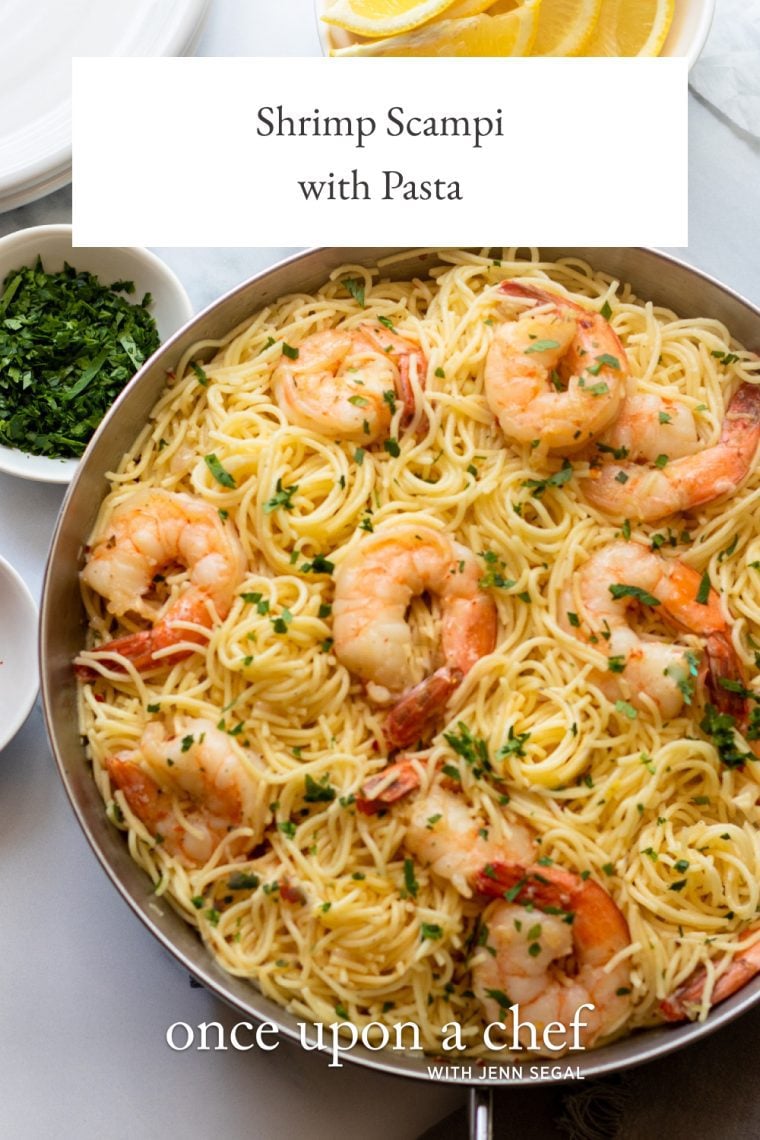
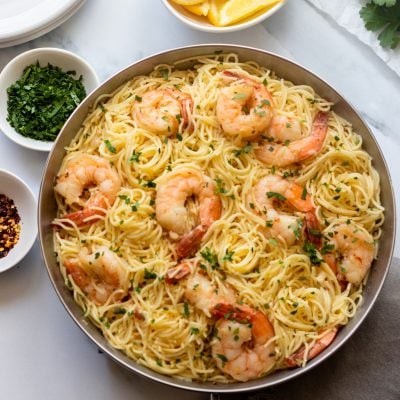
This shrimp scampi recipe is easy to pull off at home, and it delivers everything you want: juicy shrimp, tons of garlicky flavor, and pasta that actually gets enough sauce.
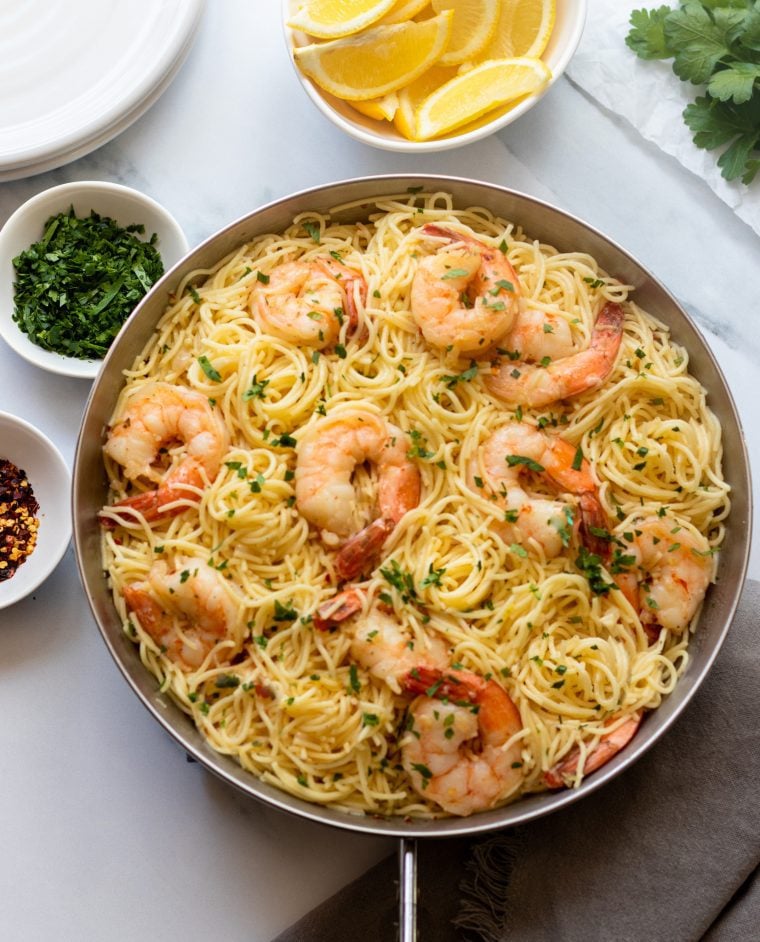
Succulent shrimp tossed in a garlicky butter sauce with white wine and lemon—shrimp scampi is one of those simple dishes that always feels a little special. It’s often served over pasta, but in many versions, the pasta gets left behind, with not nearly enough sauce or flavor. This shrimp scampi recipe is extra sauce, so the shrimp and pasta share the spotlight. You can use any long pasta, but I love angel hair or capellini; the delicate strands soak up the sauce so every bite is full of garlicky goodness.
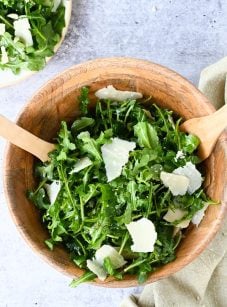
Pair this with an arugula salad, and you’ve got a complete meal in under an hour. And if you’re a fan of seafood pastas, you might also enjoy my linguine with clams, which uses similar flavors in a totally different way.
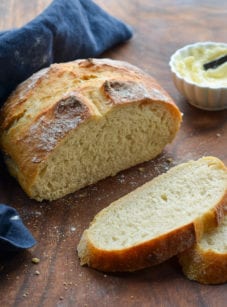
“My favorite of all shrimp recipes! We love it over angel hair pasta with some crusty bread and a glass of pinot grigio! YUM!”
What You’ll Need To Make Shrimp Scampi with Pasta
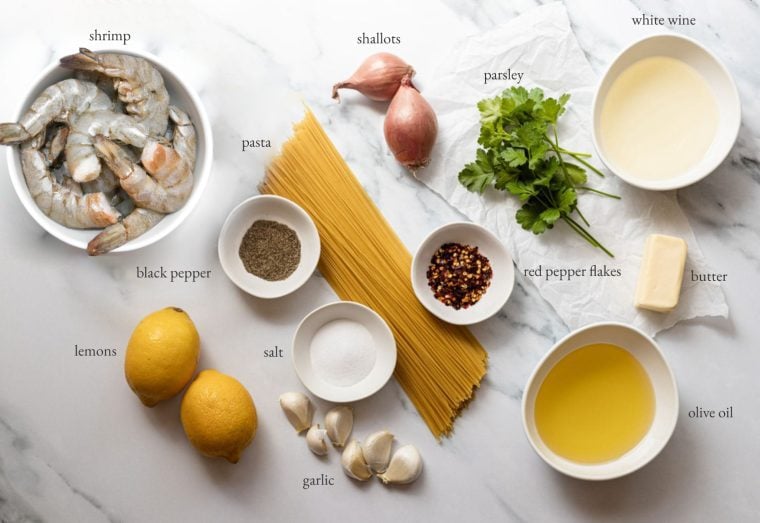
- Angel hair, spaghetti, linguine, or fettuccini: Any long pasta works here, but angel hair or capellini are especially great for soaking up all that garlicky sauce.
- Extra-virgin olive oil: Used to sauté the shallots, garlic, and shrimp—adds flavor and keeps everything from sticking.
- Shallots And Garlic: The aromatic base of the dish. With six cloves of garlic, it’s a great time to dust off the garlic press.
- Red pepper flakes: Bring a touch of heat—add more or less depending on how spicy you like it.
- Extra-large shrimp: Unless you’re near the coast, frozen shrimp are often your best bet—they’re flash-frozen at peak freshness and thaw super quickly. Extra-large shrimp are good for this dish as they’re easier to cook and stay juicy.
- Dry white wine: dds brightness and depth to the sauce. A Pinot Grigio or Sauvignon Blanc both work well—just use something you like enough to drink (and skip anything labeled “cooking wine”).
- Unsalted butter: Enriches the sauce and makes it silky.
- Fresh Lemon juice and zest: Balances the rich sauce with bright, tangy flavor.
- Jump to the printable recipe for precise measurements
Step-by-Step Instructions
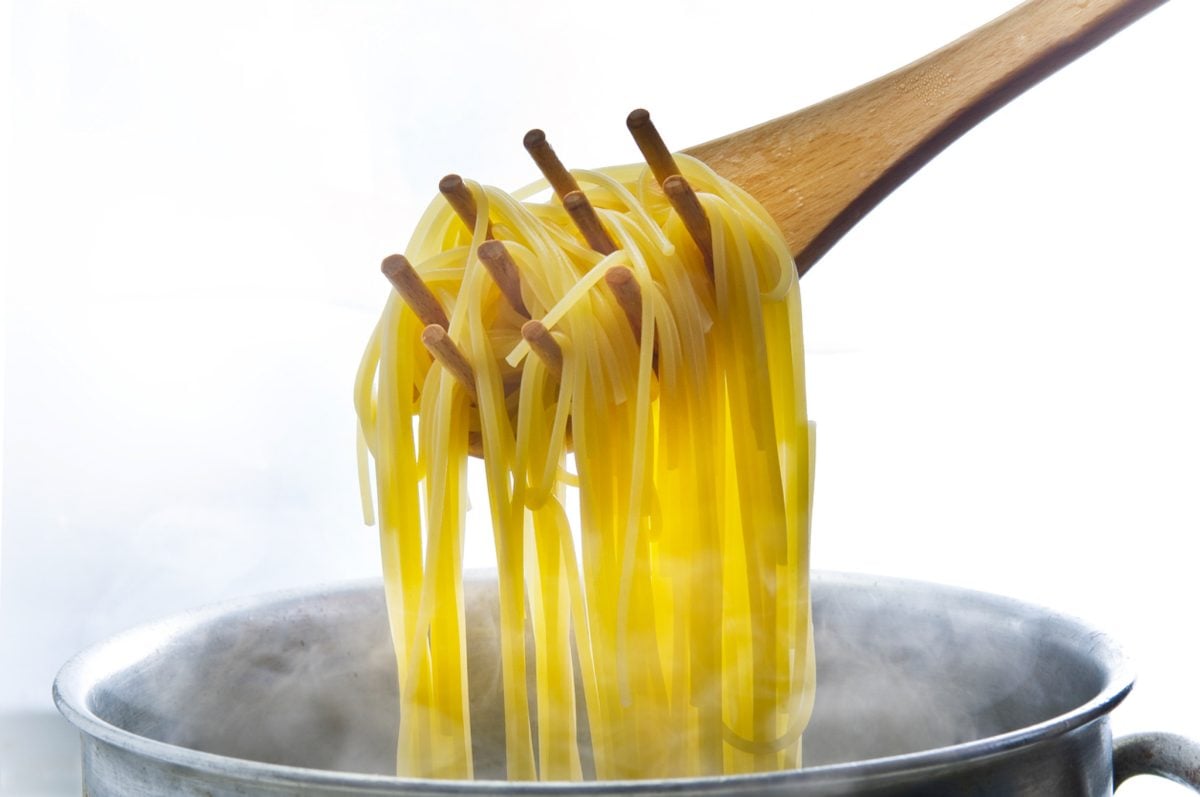
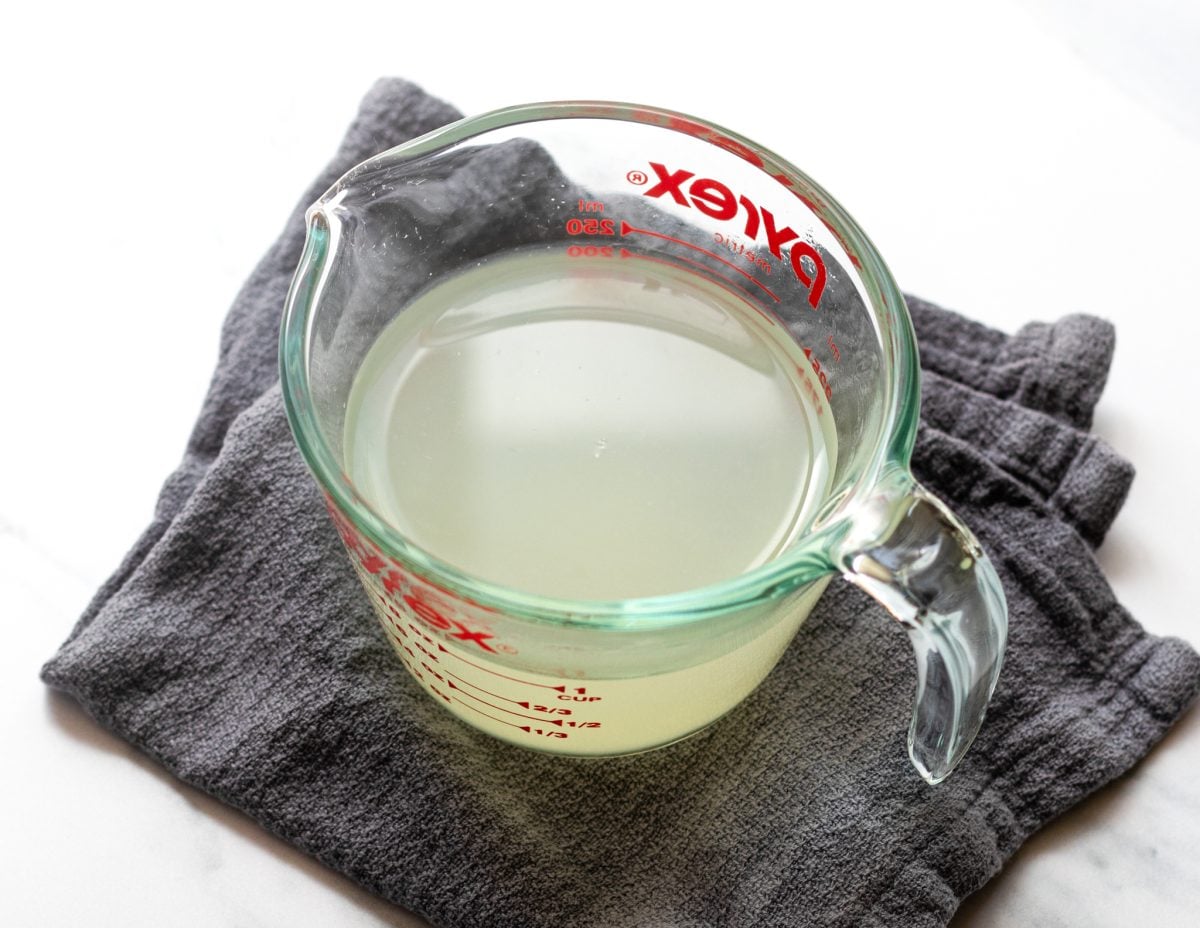
Step 1: Cook the pasta. Bring a large pot of salted water to a boil—salting it generously seasons the pasta from the inside out, not just the surface. Cook until al dente, then reserve some of the pasta water before draining. That starchy water is what binds the sauce later, giving it a silky texture that clings to the noodles instead of pooling at the bottom of the bowl.
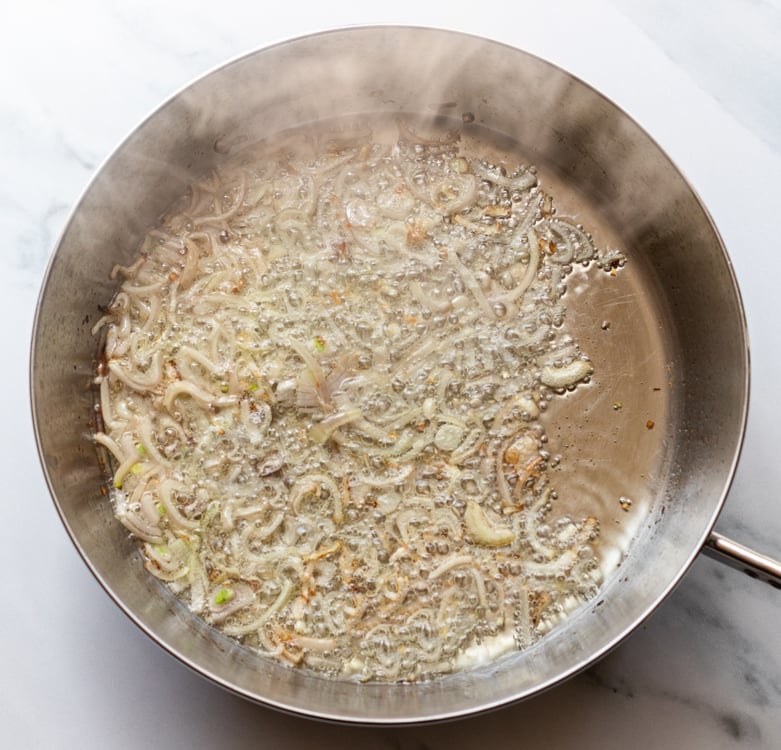
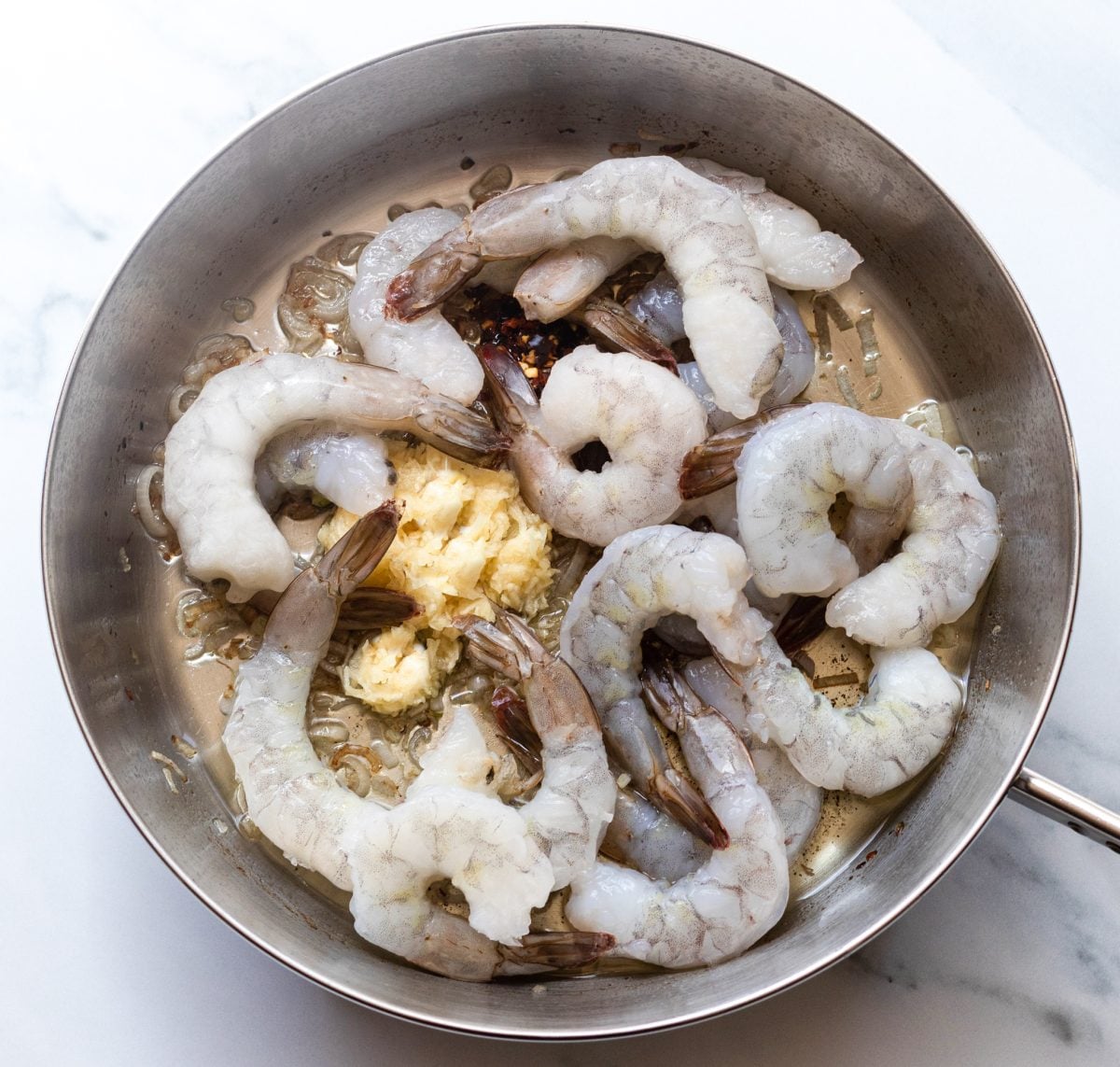
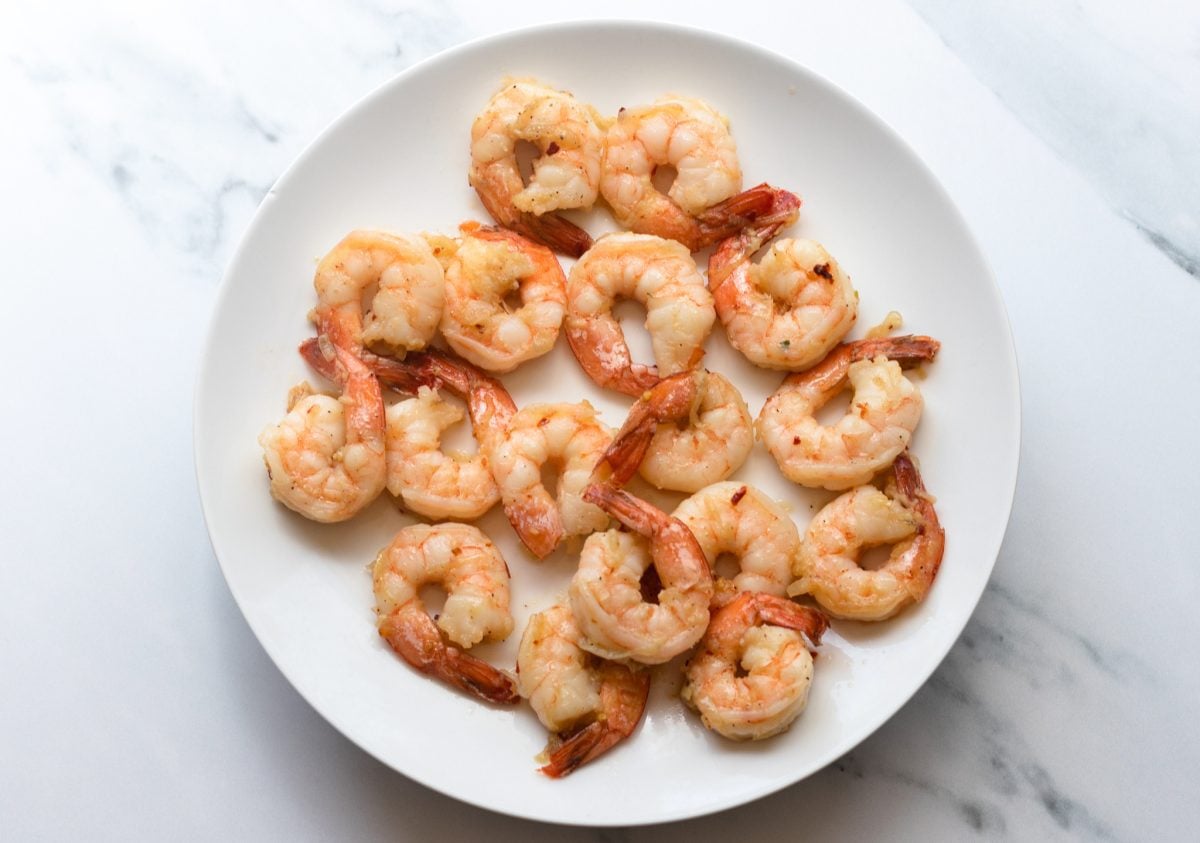
Step 2: Cook the aromatics and shrimp. While the pasta cooks, heat the oil in a large skillet and gently cook the shallots. Add the garlic, red pepper flakes, and shrimp, and seasoning together. Cook just until the shrimp turn pink, then pull them out onto a plate — shrimp go from tender to rubbery fast, so getting them out a touch early keeps them from overcooking before they’re added back in later.
Step 3: Make the sauce. Pour in the wine and let it simmer down, scraping up the browned bits from the bottom of the pan as it reduces—that’s where a lot of the flavor is hiding. As the wine cooks off, it leaves behind a mellow acidity rather than any real bite of alcohol. Stir in the butter, lemon juice, zest, and a splash of the reserved pasta water. Go easy on the water at first; it’s much easier to loosen a thick sauce than to rescue one that’s gone watery. Keep stirring until the butter melts in fully.
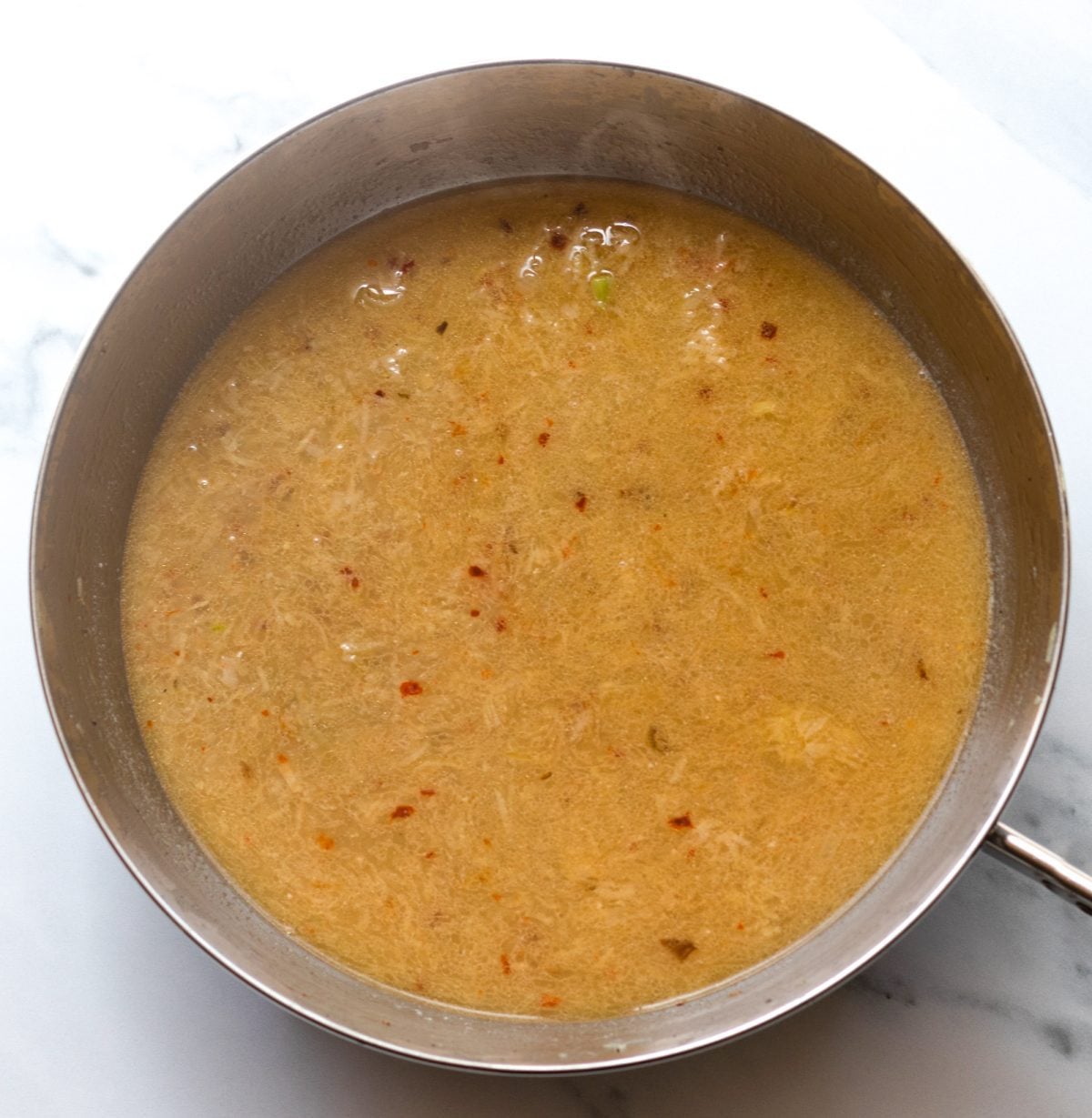
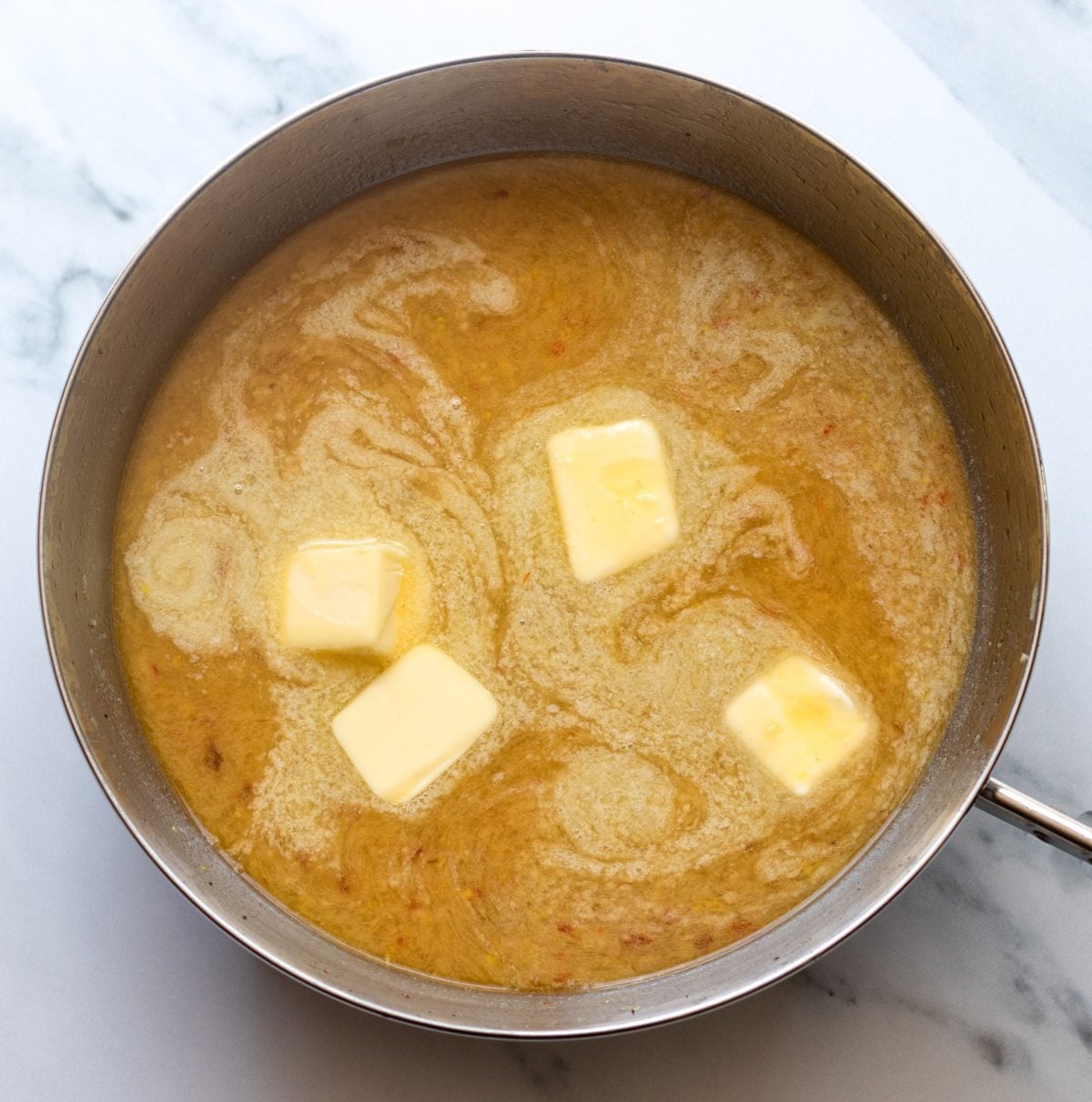
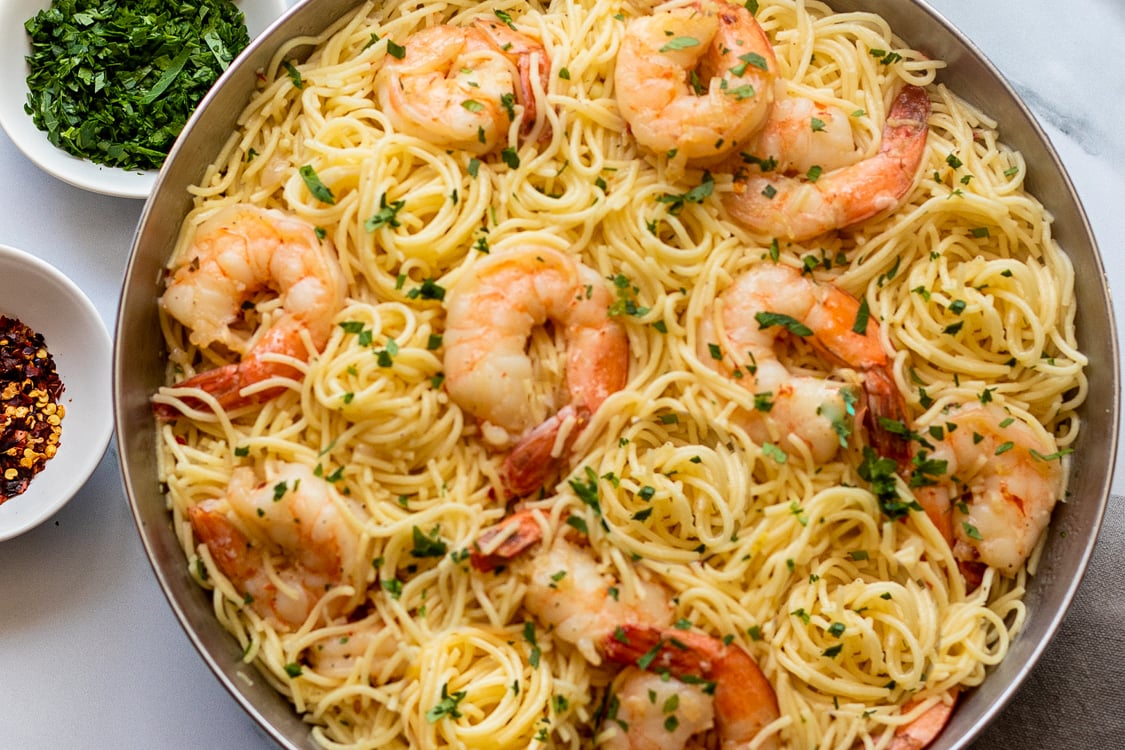
Step 4: Toss everything together. Add the pasta, tossing to coat and loosening with more pasta water as needed. Return the shrimp and any accumulated juices, and toss once more—stirring them in at the end warms them back through without cooking them any further. Finish with parsley and serve with lemon wedges.
Video Tutorial
More Shrimp Recipes You’ll Love
Shrimp Scampi with Pasta
Ingredients
- Salt
- 16 oz angel hair, spaghetti, linguine, or fettuccini
- ⅓ cup extra-virgin olive oil
- ¾ cup thinly sliced shallots, from 2 to 3 shallots
- 6 large cloves garlic, minced
- ½ teaspoon crushed red pepper flakes
- 1¼ pounds extra-large shrimp (26 to 30/lb), peeled and deveined, thawed if frozen
- Freshly ground black pepper
- ¾ cup dry white wine
- 6 tablespoons unsalted butter, cut into 4 pieces
- 3 tablespoons lemon juice plus 1 teaspoon lemon zest, from 1 to 2 lemons, plus wedges for serving
- ¼ cup finely chopped fresh parsley
Instructions
- Bring a large pot of salted water to a boil. Add the pasta and cook to al dente according to the package instructions. Reserve 1 cup (240 ml) of the cooking water, then drain.
- Meanwhile, heat the oil in a large skillet over medium heat. Add the shallots and cook, stirring frequently, for about 1 minute. Add the garlic, red pepper flakes, shrimp, and ¼ teaspoon each salt and pepper. Cook, stirring occasionally, until the shrimp are pink and just cooked through, about 3 minutes. Transfer the shrimp to a plate.
- Add the wine to the skillet and simmer until reduced by half, 3 to 4 minutes.
- Add the butter, lemon juice, and lemon zest, ½ cup (120 ml) of the reserved cooking water, and ½ teaspoon salt; stir until the butter is melted. Add the drained pasta and continue to cook, tossing, until the pasta is warmed through, adding more of the reserved cooking water as needed if the pasta seems dry. Return the shrimp and any juices from the plate to the skillet and toss with the pasta. Stir in the parsley, then taste and adjust seasoning, if necessary. Serve with lemon wedges.
Pair with
Nutrition Information
This website is written and produced for informational purposes only. I am not a certified nutritionist and the nutritional data on this site has not been evaluated or approved by a nutritionist or the Food and Drug Administration. Nutritional information is offered as a courtesy and should not be construed as a guarantee. The data is calculated through an online nutritional calculator, Edamam.com. Although I do my best to provide accurate nutritional information, these figures should be considered estimates only. Varying factors such as product types or brands purchased, natural fluctuations in fresh produce, and the way ingredients are processed change the effective nutritional information in any given recipe. Furthermore, different online calculators provide different results depending on their own nutrition fact sources and algorithms. To obtain the most accurate nutritional information in a given recipe, you should calculate the nutritional information with the actual ingredients used in your recipe, using your preferred nutrition calculator.
Followed recipe exactly except added asparagus. SO GOOD. Definitely my go to scampi from now on. Thanks!
Did you just throw the asparagus in or did you cook the asparagus first?
Perfect balance of garlic juxtaposed with the lemon.
So flavorful and easy to make!
This was delicious. I made it last night, cutting the recipe in half for just the two of us. This is a keeper. Easy and quick to make.
Delicious garlicky shrimp. I thought 6 cloves was too much, but no. It was perfect.this is a keeper recipe.
This recipe is so simple AND so delicious!
Why is this recipe called Shrimp Scampi. Scampi translated is shrimp.
Shrimp Shrimp with pasta doesn’t make sense. Why not just say Shrimp with Pasta?
I do like your recipes and have made and will continue to make them.
Hi Thelma, Lol, it’s one of those culinary names that stuck—”scampi” originally referred to a different shellfish, but in the U.S. it evolved to mean shrimp cooked in the buttery, garlicky style characteristic of the dish. And glad you liked the recipes!
Love this recipe. Make it frequently
Can you leave the white wine out or replace it with sonething?
Hi Diane, vermouth would be a good substitute for the wine. If you don’t have that on hand, you can replace it with broth. Enjoy!
Hi Jenn,
Myself and others love your recipes and this one was really good the first couple of times but the last 2 we found it to be quite oily. Could I be doing something wrong? The combined olive oil and butter is almost 3/4’s of a cup. Any suggestions?
Thanks for posting all of your recipes and keep the good ones coming.
Darb
Thanks for your kind words about the recipes – so glad you like them, but sorry to hear you’ve struggled with this the past few times you’ve made it. Did you happen to change the brand of butter or oil you were using? If the answer is no, it could be just that your palate has changed slightly; I’d try reducing the olive oil and butter a touch. Just keep in mind you may need a bit more of the cooking water to make sure the pasta is moist enough.